The Neuroscience of Self-Compassion: How It Changes Your Brain
26 March 2026
Ever catch yourself being your own worst critic? You're not alone. We all have that inner voice that can be harsh and unforgiving. But what if I told you there's a way to change that narrative—one that’s actually backed by neuroscience? Enter self-compassion.
Self-compassion isn’t just some feel-good concept; it physically changes the way your brain functions. Science shows that being kinder to yourself can rewire neural pathways, reduce stress, and even boost overall mental health. So, let’s dive deep into the fascinating ways self-compassion transforms your brain!

What Is Self-Compassion?
Before we get into the nitty-gritty of neuroscience, let’s get clear on what self-compassion actually means.Self-compassion, a term popularized by psychologist Dr. Kristin Neff, is essentially treating yourself with the same kindness and understanding as you would a close friend. It involves three key elements:
- Self-kindness – Being gentle and understanding with yourself rather than harshly critical.
- Common humanity – Recognizing that everyone makes mistakes and experiences challenges.
- Mindfulness – Staying present with your emotions without over-identifying with them.
Sounds simple, right? But for many of us, self-compassion doesn’t come naturally. Fortunately, neuroscience reveals that we can train our brains to be more compassionate toward ourselves.

The Brain’s Default Mode: Self-Criticism vs. Self-Compassion
Our brains are wired for survival, which unfortunately means they have a negativity bias. This bias makes us focus more on potential threats than positive experiences—a useful trait when avoiding danger, but not so great when it comes to self-talk.The Self-Criticism Loop
When you make a mistake, your brain often triggers the fight-or-flight response. This activates the amygdala, the part of the brain responsible for processing fear and stress. In turn, the body releases cortisol (the stress hormone). Over time, chronic self-criticism floods your brain with stress, making you feel anxious, overwhelmed, and even depressed.The Self-Compassion Shift
The good news? You can break this cycle. Studies show that practicing self-compassion stimulates the parasympathetic nervous system, calming the stress response. More importantly, it activates regions of the brain associated with emotional regulation and well-being, such as:- The Prefrontal Cortex – Helps with self-awareness and rational thinking.
- The Insula – Enhances emotional intelligence and empathy.
- The Anterior Cingulate Cortex (ACC) – Improves self-regulation and reduces impulsivity.
By practicing self-compassion, you're literally reshaping your brain’s responses, creating a healthier and more positive internal dialogue.
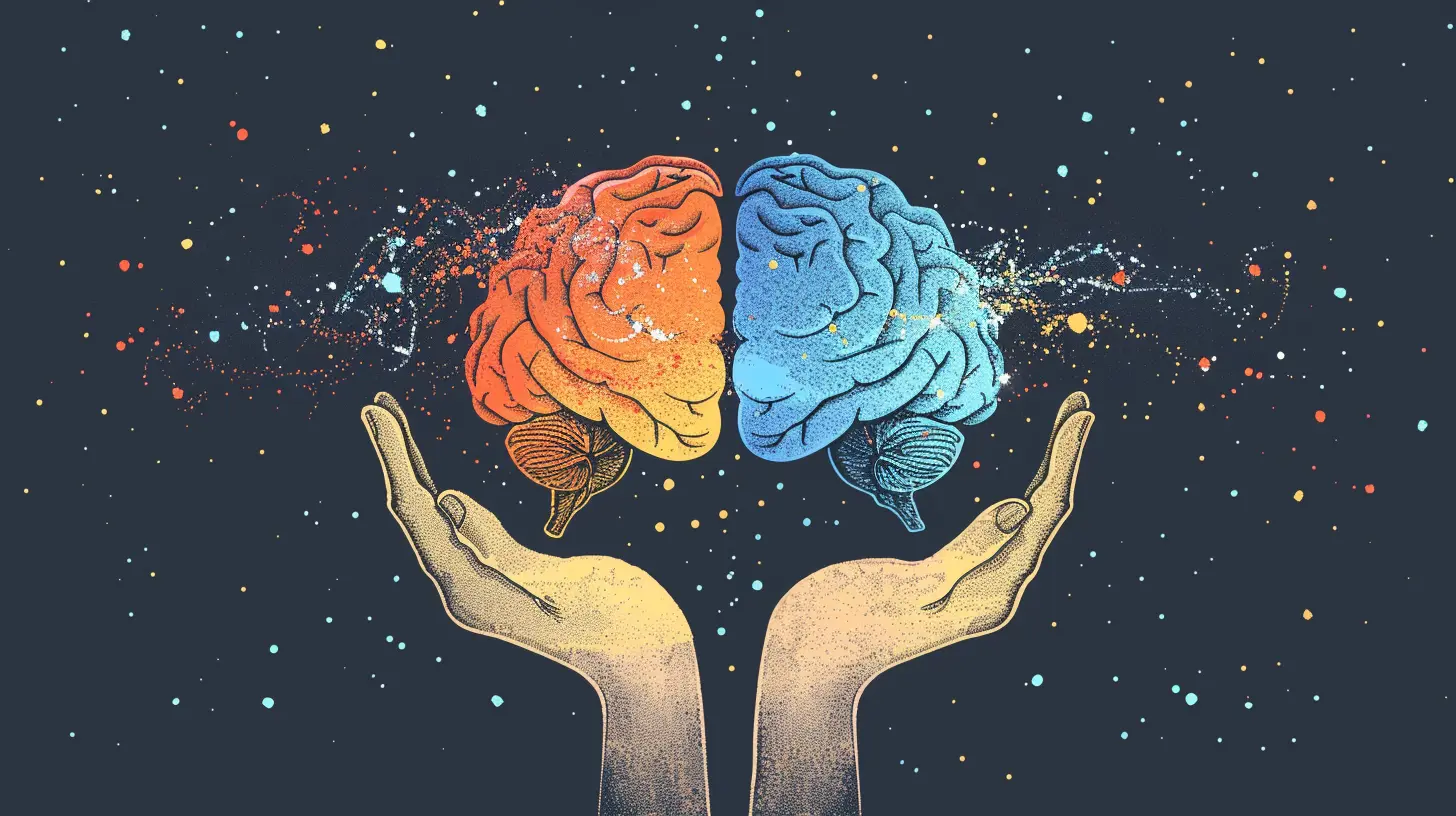
The Neuroscience Behind Self-Compassion
Now, let’s take a closer look at how self-compassion physically changes your brain.1. Strengthens the Prefrontal Cortex (Your Brain’s “CEO”)
The prefrontal cortex (PFC) is responsible for decision-making, self-awareness, and emotional control. Research suggests that people with higher levels of self-compassion show increased activity in this part of the brain.When you shift from self-criticism to self-kindness, the PFC engages in a more balanced way, helping you respond to challenges with logic rather than emotional overreaction.
2. Reduces the Amygdala’s Stress Response
The amygdala is the brain’s alarm system. When activated, it triggers stress, anxiety, and fear. Self-compassion has been found to decrease amygdala activation, meaning you’re less likely to spiral into stress when things don’t go your way.MRI scans reveal that practicing self-compassion for even a few weeks can shrink the amygdala, making it easier to stay calm in stressful situations.
3. Boosts the Release of “Feel-Good” Chemicals
Ever notice how a comforting hug or a kind word can instantly make you feel better? That’s because acts of compassion—toward others or ourselves—release oxytocin, often called the “love hormone.”Oxytocin promotes feelings of trust, safety, and relaxation. In contrast, self-criticism triggers cortisol, which increases stress. By practicing self-compassion, you’re flooding your brain with oxytocin and other feel-good neurotransmitters like dopamine and serotonin, helping you feel more at peace.
4. Increases Neuroplasticity (Rewiring the Brain)
Neuroplasticity is your brain’s ability to rewire itself based on experiences and behaviors. When you repeatedly engage in self-compassion, you’re strengthening new neural pathways that make kindness toward yourself the default response.Think of it like building a muscle—the more you exercise self-compassion, the stronger it becomes!

The Benefits of Self-Compassion on Mental Health
Adopting self-compassion doesn’t just change your brain structurally; it also improves overall well-being. Here’s how:1. Lowers Anxiety and Depression
Studies show that people who practice self-compassion experience lower levels of anxiety and depression. By reducing the brain’s stress response, self-compassion prevents rumination (that nasty habit of replaying negative thoughts on a loop).2. Enhances Emotional Resilience
Life is full of setbacks, but self-compassion helps you bounce back faster. Instead of beating yourself up over failures, you learn to view them as growth opportunities.3. Improves Relationships
When you’re kinder to yourself, you naturally extend that kindness to others. Self-compassion fosters greater empathy and connection, making relationships healthier and more fulfilling.4. Reduces Burnout
Whether it’s work stress, parenting challenges, or personal struggles, self-compassion prevents emotional exhaustion. Instead of pushing yourself to the brink, you learn to set boundaries and prioritize self-care.How to Cultivate Self-Compassion
So, how do you train your brain for self-compassion? Here are a few science-backed strategies:1. Practice Mindful Self-Talk
Next time you catch yourself being self-critical, pause and reframe the thought. Ask yourself: Would I say this to a friend? If not, offer yourself the same kindness you would give someone you love.2. Use Self-Compassion Meditation
Research shows that loving-kindness meditation (LKM) increases self-compassion by activating brain areas related to emotional regulation. Spend a few minutes each day repeating phrases like:> May I be kind to myself. May I accept myself as I am. May I be at peace.
3. Engage in Physical Self-Compassion
Your body responds to physical comfort. Placing a hand on your heart, giving yourself a gentle hug, or even just deep breathing can stimulate oxytocin release, helping you feel safe and calm.4. Keep a Self-Compassion Journal
Journaling about moments when you were hard on yourself—and how you can reframe them with kindness—helps reinforce positive neural pathways.5. Seek Professional Guidance
If self-compassion feels out of reach, therapy can help. Compassion-focused therapy (CFT) is a proven approach that teaches individuals how to develop self-compassion through structured exercises.
Final Thoughts
Self-compassion isn’t about ignoring mistakes or avoiding responsibility. It’s about approaching setbacks with kindness rather than judgment. And now, thanks to neuroscience, we know that practicing self-compassion isn’t just good for the soul—it literally changes the brain!So, the next time your inner critic speaks up, remember: you have the power to rewire your brain. Treat yourself with the same kindness you’d offer a friend, and watch how your mental and emotional well-being transform for the better.
all images in this post were generated using AI tools
Category:
Self CompassionAuthor:

Nina Reilly
Discussion
rate this article
2 comments
Seraphis Howard
This article beautifully highlights the powerful link between self-compassion and brain health! Understanding how nurturing our inner selves can reshape our neural pathways is truly inspiring. Can’t wait to embrace more self-kindness in my life!
April 13, 2026 at 4:23 PM
Nina Reilly
Thank you for your thoughtful comment! I'm glad you found the connection between self-compassion and brain health inspiring. Wishing you all the best on your journey toward more self-kindness!
Wendy Ramirez
Fascinating exploration of self-compassion's impact on brain function! I'm curious about how specific practices can enhance these neural changes. Are there particular techniques or exercises you recommend for individuals looking to cultivate self-compassion more effectively? Can't wait to learn more about this transformative journey!
March 27, 2026 at 3:52 AM
Nina Reilly
Thanks for your interest! Techniques like mindfulness meditation, positive self-talk, and journaling can really enhance self-compassion. Practicing these regularly can lead to lasting neural changes. Excited to share more soon!