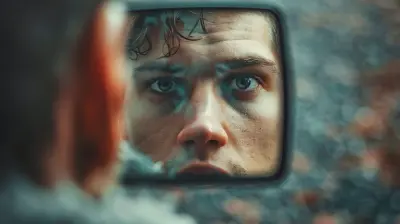
Why Emotional Detachment Is Becoming More Common by 2027
20 April 2026
Let’s be honest for a second. How many times this week have you scrolled past heartbreaking news, shrugged at a friend’s text, or felt a strange, hollow calm in a situation that should have sparked a firestorm of feeling? If you’re nodding along, you’re not alone. There’s a quiet, pervasive shift happening in our emotional landscapes. We’re building walls where there used to be windows, and by 2027, this trend of emotional detachment isn’t just continuing—it’s becoming the new normal.
But this isn’t about becoming cold or heartless. It’s more nuanced, like a psychological callus forming from constant friction. We’re adapting, in our own ways, to a world that feels increasingly overwhelming. So, why is this happening? Let’s pull up a chair and untangle this together.

The Digital Paradox: Connected Yet Profoundly Alone
Our smartphones are miracles. They connect us to everyone, everywhere, all at once. Yet, here’s the paradox: this hyper-connection is a prime architect of our detachment. Think of it like this: our brains have a daily calorie budget for emotional energy. Every ping, notification, tragic world event, and curated highlight reel from an acquaintance consumes a little of that budget.By the time we get to a real, in-person interaction, we’re emotionally spent. We’ve already felt secondhand joy, anger, and despair for dozens of people before breakfast. The constant, low-grade stress of being "on" and available creates a state psychologists call chronic emotional overload. Our defense? To dial down the sensitivity. We subconsciously learn to engage with human drama through a buffer—a screen, a like button, a brief comment. This buffer, by 2027, won’t be a choice; it will be a conditioned reflex for digital natives who have never known a world without it.
The Comparison Trap and the Authenticity Drought
Scroll, compare, feel inadequate. Repeat. Social media isn’t just a gallery; it’s a relentless benchmarking system for our own lives. When everyone’s life looks like a masterpiece, our own messy, emotional, unedited reality can feel shameful. So, we do two things: we hide our true, vulnerable selves, and we become skeptical of the perfection we see in others. This breeds a profound detachment from authentic emotional exchange. Why risk showing your cracked interior when everyone else’s facade is so flawlessly polished? We’re trading deep, risky connection for safe, superficial engagement. By 2027, the muscle for authentic vulnerability may atrophy from simple lack of use.
The World Is On Fire (Literally and Figuratively): Trauma at a Distance
Our grandparents’ worries were often local, tangible. Our news cycle is global, apocalyptic, and 24/7. We are bearing witness, in real-time, to wars, climate disasters, political upheaval, and social injustices on a scale never before possible. This is what scholar Robert J. Lifton called "psychic numbing." The human psyche isn’t built to process the suffering of millions. It’s too vast, too horrific.So, to function, we compartmentalize. We detach. That news article about a famine across the world? We might feel a twinge, but then we click away. It’s not cruelty; it’s psychological survival. If we truly, fully felt the weight of every global tragedy, we’d be paralyzed. By 2027, as these cascading crises likely intensify, this protective detachment will become a more common and necessary coping mechanism. We’ll learn to care about issues without letting them emotionally destroy us—a tricky, and often lonely, tightrope to walk.
The Burnout Economy: When Your Feelings Are a Professional Liability
Let’s talk about work. The gig economy, constant restructuring, and the "hustle" culture have redefined the employer-employee relationship. Loyalty is often one-sided, and job security feels like a relic. In this environment, emotional investment is a risk. Getting passionately attached to a project, a team, or a company mission can set you up for profound hurt when the next round of layoffs hits.So, we professionalize our detachment. We become psychological contractors: doing the job, but guarding our hearts. We’re encouraged to be "resilient," which too often translates to "emotionally impervious." By 2027, as AI and automation reshape jobs further, this transactional approach to our professional selves will bleed even more into our personal identities. We’ll see our time and skills as assets to deploy, not parts of our soul to invest.

The Relationship Recalculation: Self-Preservation Over Sacrifice
Our blueprints for relationships are changing. Older generations often prized stability and sticking it out, even at high emotional cost. Today, with greater emphasis on mental health and self-actualization, we’re more likely to run a cost-benefit analysis on our connections.Is this friendship draining more than it fills? Is this romantic relationship costing me my peace? We’re becoming quicker to detach from dynamics that feel toxic or one-sided. While this is ultimately healthy—nobody should endure emotional abuse—it can also foster a disposable mindset. The minute a relationship requires hard, emotional labor, the temptation to simply log off and detach grows. By 2027, the skill of repairing a rift may be rarer than the instinct to sever it and protect one’s own energy. It’s self-preservation, but it can border on emotional isolationism.
The Illusion of Control in a Chaotic World
Feeling out of control is terrifying. Our world can feel chaotic, random, and unfair. Emotional detachment, ironically, offers a perverse sense of control. If I don’t care too much, I can’t be hurt too badly. If I don’t invest fully, I can’t fail completely. It’s a pre-emptive strike against potential pain.We see this in everything from hesitant dating ("I’ll just keep swiping") to cautious parenting ("I mustn’t be a helicopter parent"). We’re trying to engineer risk out of the human experience. By 2027, this curated emotional life—where we try to feel only the "good" feelings on our own terms—will be more systematized, perhaps even through apps and digital wellness tools that encourage "emotional regulation" but may inadvertently teach suppression.

So, What Do We Do About It? Navigating the Detachment Dilemma
This isn’t a prophecy of doom. Awareness is the first step. Emotional detachment isn’t inherently evil; it’s a tool. Like any tool, it’s about how we use it. Used wisely, it’s a boundary that protects us from burnout and toxicity. Used as a default setting, it becomes a prison that cuts us off from joy, love, and the messy beauty of being human.By 2027, the most crucial psychological skill won’t be learning to detach—that will come naturally. The vital skill will be conscious re-attachment. It will be the deliberate choice to put the phone down and look someone in the eyes. To sit with a painful feeling instead of numbing it with another episode. To risk vulnerability with a trusted few. To care deeply about something even when you can’t control the outcome.
It will mean building small, intentional pockets of authentic connection in a detached world. A weekly coffee with a friend, phone-free. A commitment to a local cause where you can see the real impact. Practicing saying, "I feel…" instead of "I think…"
The tide of detachment is rising, yes. But we can learn to swim in it, to find the buoys of real connection, and to remember that while walls protect, they also block the view. The goal by 2027 isn’t to feel everything all the time—that’s unsustainable. It’s to feel the right things, for the right reasons, with the right people. And to have the courage to turn the buffer off, now and then, and let the world touch us again, raw and real and beautiful as it is.
all images in this post were generated using AI tools
Category:
Emotional DetachmentAuthor:

Nina Reilly
Discussion
rate this article
2 comments
Viviana Dorsey
Great, just what we needed...
July 11, 2026 at 3:16 PM
Zeal Newman
Embrace connection, defy emotional isolation!
April 25, 2026 at 4:58 AM
Nina Reilly
Absolutely! Building connections is crucial in countering emotional isolation. Let's prioritize our relationships.