Enhancing Understanding of Correlation and Causation in Psychology Education
September 4, 2025 - 16:18

"Correlation does not equal causation" is perhaps the most familiar phrase to any student or instructor in an Introductory Psychology class. While short and straightforward, this concept often poses challenges for learners who struggle to grasp its implications. Recent discussions among educators emphasize the importance of effectively teaching this principle to avoid misconceptions that can arise in psychological research and real-world applications.
To improve comprehension, educators are exploring innovative teaching methods that engage students more actively. This includes the use of real-life examples, interactive activities, and visual aids that illustrate the distinction between correlation and causation. By emphasizing critical thinking and analytical skills, instructors aim to help students recognize the limitations of correlational data.
Furthermore, incorporating case studies and data analysis exercises into the curriculum allows students to practice discerning the difference between correlation and causation in various contexts. As psychology continues to evolve as a discipline, the need for a solid understanding of these concepts remains crucial for future practitioners and researchers.
MORE NEWS

July 18, 2026 - 02:09
Psychology says people who ask a lot of questions while watching a movie aren't distracted: What this behaA new look at an old movie theater annoyance suggests that the person whispering questions in your ear might not be trying to ruin the film. According to recent psychological research, viewers who...

July 17, 2026 - 09:05
I'm WEIRD, it turns out, and so is almost everyone psychology has ever studied — a narrow twelve percent of humanity whose responses somehow came to stand in for everything we think we know about the human mindIt turns out I am WEIRD. That is not an insult, but a label psychologists use for a very specific group of people. WEIRD stands for Western, Educated, Industrialized, Rich, and Democratic. It...
July 16, 2026 - 21:34
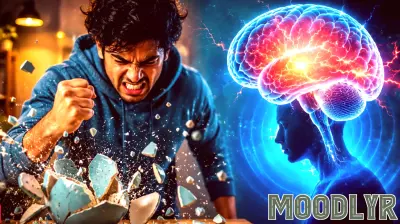
Psychology says people who feel like breaking things when they're angry may be responding to frustration aA new look at anger suggests that the urge to break objects when frustrated is not a sign of violence, but a natural response to emotional overload. Psychology researchers note that many people...

July 16, 2026 - 13:39
Psychology suggests we don't reason toward truth so much as defend what we already believe: we seek out the facts that confirm us and quietly wave away the rest — the 'confirmation bias' baked into how we thinkIn 1998, a Tufts psychologist named Raymond Nickerson published a long review article pulling together decades of scattered experiments under one heading. That heading was `confirmation bias,` and...