How Fear Affects Decision-Making Under Pressure
7 January 2026
Let’s play a little game. Imagine you’re standing on a tiny rickety bridge suspended 300 feet above a canyon. Below is nothing but rocks, regret, and maybe a wild goat judging your life choices. Now someone says, “Quick! Decide which wire to cut, red or green!”
Suddenly, your brain turns into a confused bowl of spaghetti.
Welcome to the wonderfully weird world of fear and high-pressure decision-making. While it's funny to joke about it (mostly because it keeps us from crying), this is something that affects us all. Whether you're dealing with an emergency, a big job interview, or deciding whether to text your ex after three margaritas—fear has a sneaky way of jumping into the driver’s seat.
In this deep-dive-meets-stand-up-routine of an article, we’re going to unravel how fear affects decision-making under pressure—with a side order of humor, neuroscience, and just a sprinkle of panic.
🧠 The Brain on Fear: Your Inner Drama Queen
Let’s start with the ringmaster of our internal chaos: the brain. Specifically, the amygdala, a pair of almond-shaped structures that function like your emotional smoke detector. It’s the one that yells, “FIRE! RUN!” even when it’s just your toaster acting up.When fear strikes, your amygdala goes full drama mode. It signals the release of stress hormones like cortisol and adrenaline—great for running from bears, not so great for making rational choices about your next career move.
Those hormones do things like:
- Increase your heart rate (so you can audibly hear your own doom).
- Shut down non-essential systems (like digestion—go ahead, skip that sandwich).
- Narrow your focus (because apparently, multitasking is a luxury when panic shopping for toilet paper).
All these reactions are part of the fight-or-flight response—designed for survival, not for calm, logical reasoning. So while you’re trying to make a complex decision, your brain is basically screaming, “JUST DO SOMETHING BEFORE WE DIE!”
😱 Fight, Flight… or Freeze Like Your Laptop During a Zoom Call
You’ve probably heard of “fight or flight,” but there’s another member of this panic posse: freeze. It’s what happens when a deer spots headlights or when you see your crush and forget how to pronounce your own name.When fear overwhelms your system, freezing can feel like your brain just cartwheeled into a void. Under pressure, people might:
- Stare blankly at a screen for 10 minutes.
- Say “Uhh... I don’t know?” when asked their name.
- Or worse, make a snap decision that could rival the time you gave yourself bangs at 2 a.m.
So, yes—freeze is real. And it’s not just about physical stillness; it’s your internal processing system buffering like a low-budget Netflix stream.
☠️ Why Pressure Makes Us Dumber (Temporarily, We Hope)
Let’s say you’re in a high-stakes meeting, and your boss unexpectedly asks for your opinion on the company’s quarterly growth. Panic washes over you like a tsunami made entirely of awkward stutters.Why? Because pressure reduces our working memory—basically, it’s like your brain’s RAM gets downgraded to a potato. You know stuff. You practiced the stats. But suddenly, all you can remember is your third-grade locker combination and lyrics to a 2002 boy band song.
This happens because of cognitive overload—when fear shoots up, your brain is too busy juggling worry, panic, and “what-if” scenarios to think clearly. Researchers call it “choking under pressure,” but really, it’s your brain throwing its hands up and shouting, “I QUIT!”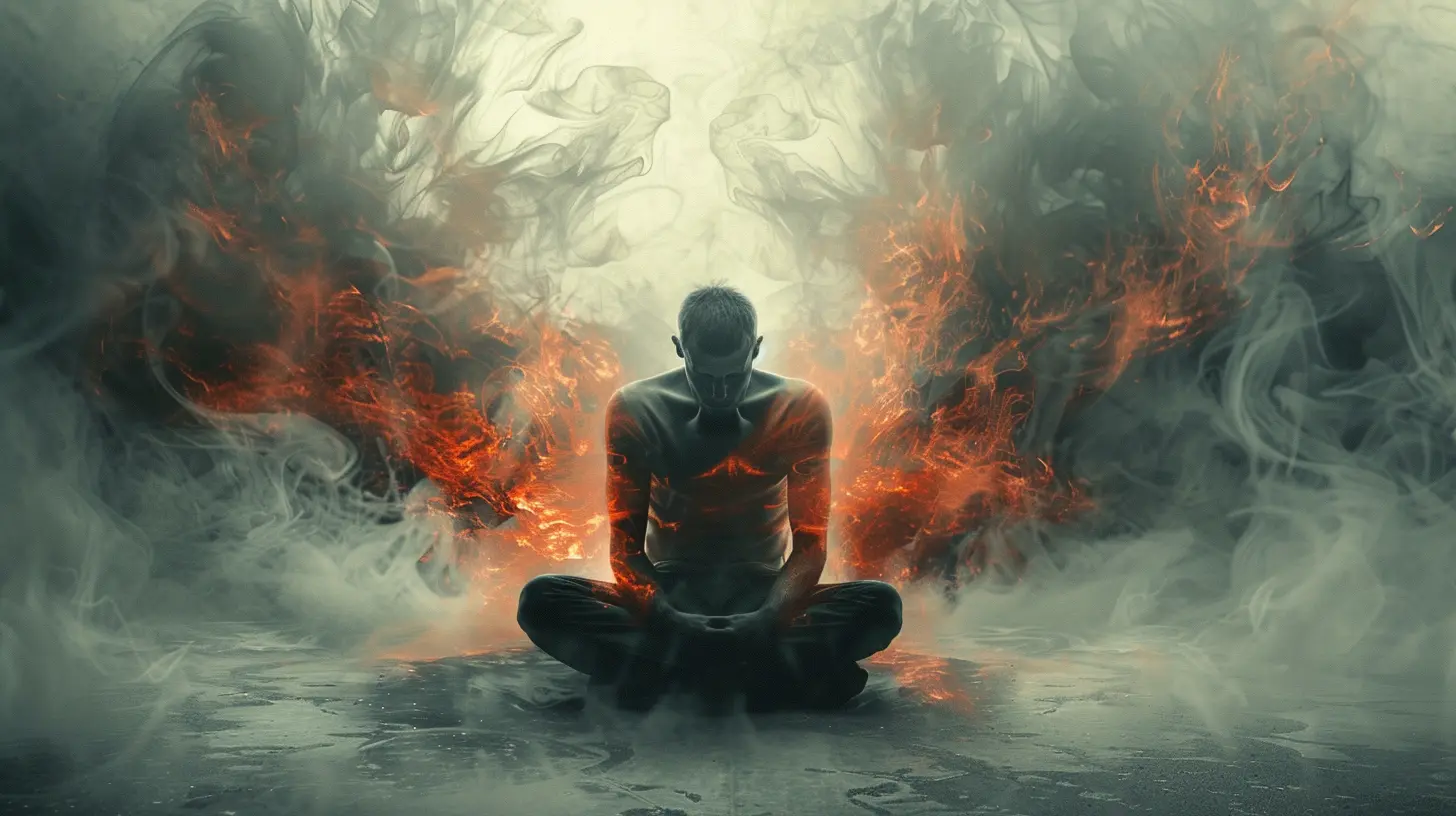
🧩 Decision-Making: The Risky Business of Choosing While Freaking Out
Here’s the kicker: Even though fear clouds judgment, it also amplifies our tendency to take shortcuts. These shortcuts, or “heuristics,” can be useful sometimes… like using muscle memory to drive home. But when emotions run the show, we might:- Jump to conclusions
- Rely on gut instincts (that are more “gas” than genius)
- Base decisions on past trauma or worst-case scenarios
This is when people pick the “safe” option—even if it’s not the best one. Fear makes us crave certainty, like when we’d rather take a below-average job offer than risk waiting for something better. Comfort > unknown.
So, ironically, fear can make us more risk-averse or risk-seeking, depending on the context. It’s like spinning the fear-wheel-of-fortune: Will you freeze, fight, bolt, or blindly pick Door #3?
🎯 High-Pressure Situations: Where Logic Goes to Die
Imagine defusing a bomb, performing surgery, or even just giving a wedding toast after a few too many bubbly champagnes. Pressure + fear = disaster cocktail, shaken and stirred.In these high-stakes moments, we either:
1. Overanalyze every single detail (“Wait, what if choosing the chicken means I dislike vegetarians?”)
2. Act impulsively with zero filter (“I’m just gonna YOLO this slide presentation and hope for divine intervention.”)
Sometimes we default to the Status Quo Bias, meaning we just stick with what's familiar—even if it's insane—because change requires brain bandwidth we just don't have in that moment.
And don't even talk about analysis paralysis—the art of overthinking so hard you forget what the actual problem was in the first place.
🎢 The Emotional Roller Coaster: How Fear Hijacks Rational Thought
Have you ever made a decision while you're scared, then looked back later and thought, “Who WAS that person?”That’s because under fear, your prefrontal cortex—which handles logic, planning, and all that adulting stuff—basically gets benched. Meanwhile the emotional brain (hi again, amygdala!) says, “Move over, nerd, I got this.”
This leads to delightful outcomes like:
- Overreacting to small problems
- Misjudging people's intentions
- Making decisions purely to escape discomfort, not based on long-term thinking
If you’ve ever rage-quit a job or sent a 2 a.m. “we need to talk” text, you’ve felt this. Congrats, you’re human.
💡 The Good News: Fear Isn’t Always the Villain
Just to throw a little plot twist in here—fear isn’t all bad. Nope. In fact, a moderate amount of fear can enhance decision-making.That’s right—fear can sharpen focus, heighten senses, and create laser-like awareness. Think of it like coffee for your instincts (without the jittery bathroom breaks).
Elite athletes, surgeons, and performers often use pressure and fear to enter a flow state—channeling that energy into amazing performance. It’s when fear is overwhelming, prolonged, or unmanaged that it becomes the clingy ex climbing through your emotional window at 3 a.m.
Moderation is key. A little fear = adrenaline-fueled superpowers. Too much fear = you can’t remember how to function.
🦸♂️ How to Keep Your Cool When Your Brain Wants to Freak Out
So how do we stop fear from making us act like headless chickens? Glad you asked.1. Practice Under Pressure
Do the uncomfortable stuff before it matters. Rehearse, role-play, and simulate high-stress scenarios so your brain doesn’t throw a tantrum when it’s go-time.2. Breathe Like a Zen Master
Slow, deep breathing tells your brain, “Hey, we’re not in mortal danger.” This reduces cortisol and brings decision-making parts of your brain back online.3. Name the Fear
Seriously—say it out loud. Naming your fear shifts brain activity back into the rational zone. “I’m afraid I’ll mess up this speech” makes it easier to tackle than letting it fester like mystery leftovers in the fridge.4. Break It Down
Make big decisions smaller. If the choice feels monumental, break it into tiny steps, and just take the next one. Baby steps beat epic flailing.5. Sleep, Snack, Repeat
Hungry? Exhausted? Welcome to the Fear Olympics. Physical well-being massively affects mental decisions. Take care of the basics. Your brain is not a robot—it needs fuel and rest.👩⚕️ When Fear is Chronic: The Dark Side of Decision Fatigue
Let’s get real for a sec: If fear is running your brain 24/7, it’s time to pause and check in.Constant stress leads to decision fatigue, where even choosing pizza toppings becomes a crisis. Chronic fear can also breed anxiety disorders, burnout, and a deep love-hate relationship with your own brain.
Therapy, mindfulness, and setting boundaries (like not answering emails at 11 p.m.) are your allies here. You don’t have to fight fear alone—and your future self will thank you.
✌️ Final Thoughts: Fear is Inevitable, But Foolish Decisions Are Optional
Fear is like that kid in school who never stops talking. It’s loud, dramatic, and constantly jumping to conclusions. But if you give it the mic all the time, you’ll end up living in panic-mode instead of progress-mode.The trick isn’t to eliminate fear—it’s to acknowledge it, manage it, and make decisions anyway.
The next time you're under pressure—remember this article, take a breath, and give fear a respectful nod as you confidently choose the metaphorical red wire (or green… you’ll figure it out). You’ve got this. Probably.
all images in this post were generated using AI tools
Category:
Psychology Of FearAuthor:

Nina Reilly
Discussion
rate this article
2 comments
Zeal McKittrick
This article brilliantly explores the intricate relationship between fear and decision-making under pressure. It highlights how fear can cloud judgment and lead to impulsive choices, while also suggesting strategies to harness it for better outcomes. A must-read for anyone looking to improve their decision-making skills!
February 3, 2026 at 3:53 PM
Nina Reilly
Thank you for the kind words! I'm glad you found the insights valuable. Fear is a powerful force, and understanding its impact can truly enhance decision-making.
Runeveil McBride
In shadows cast by fear's embrace, Our choices waver, hearts race. Yet in the pressure’s gripping hold, Wisdom whispers brave and bold. Embrace the chaos, let stories unfold.
January 8, 2026 at 4:48 AM
Nina Reilly
Thank you for your poetic insight! Fear indeed influences our decisions, but embracing chaos can lead to courageous outcomes and valuable stories.