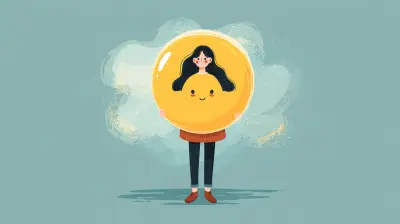
Ways to Cultivate Emotional Presence in 2026
24 April 2026
You know that feeling, right? You’re scrolling through your phone while your coffee gets cold, half-listening to a friend’s story, and suddenly you realize you haven’t felt anything in hours. Welcome to 2026, where our attention spans are shorter than a TikTok loop and our emotions often feel like background noise in a world that never stops pinging.
But here’s the thing: emotional presence—the ability to fully inhabit your feelings without judgment or distraction—isn’t just some woo-woo trend. It’s the secret sauce to mental resilience, deeper relationships, and actually enjoying your life. In 2026, with AI assistants running our schedules and dopamine hits on tap, cultivating emotional presence isn’t optional; it’s survival. So, let’s ditch the jargon and get real. How do you actually do this? Grab a cup of tea (or coffee, no judgment), and let’s dive into some practical, weirdly effective ways to show up for yourself this year.

Why Emotional Presence Matters More Than Ever in 2026
Let’s paint a picture. You’re walking down a street in 2026. Everyone’s wearing smart glasses that overlay notifications onto their vision. Your wrist vibrates with a reminder to “breathe” every hour. Your fridge just ordered groceries for you. Sounds convenient, right? But here’s the catch: all this seamless tech is quietly stealing your ability to feel the moment. Emotional presence isn’t just about being “mindful” in some Zen garden way—it’s about reclaiming your humanity from the machines.Think of emotional presence as your internal Wi-Fi signal. When it’s strong, you can connect with joy, sadness, anger, and even boredom without buffering. When it’s weak, you’re just a ghost in the machine, running on autopilot. In 2026, with climate anxiety, political noise, and the constant hum of “more, faster, better,” your emotional presence is your anchor. It’s what keeps you from drifting into burnout or numbness. So, how do we strengthen that signal? Let’s break it down.

The Art of “Unplugged” Emotional Check-Ins
You’ve heard of “digital detox,” but let’s be honest—that’s like telling a fish to stop swimming. Instead, try what I call micro-check-ins. Set a random alarm on your phone (yes, ironically, use tech to fight tech) that goes off three times a day. When it buzzes, stop everything. No, not “just finish this email” stop. Everything stop. Close your eyes for 30 seconds and ask yourself: What am I feeling right now? Don’t judge it. Don’t try to fix it. Just notice.Here’s the twist: don’t label it as “good” or “bad.” Just name the sensation. Is your chest tight? That’s anxiety, maybe. Is your stomach fluttering? That’s excitement. Is there a dull ache behind your eyes? That’s exhaustion. By naming it, you’re not solving it—you’re seeing it. And seeing is the first step to presence.
I do this while waiting for my coffee to brew. It’s weird at first, like talking to a stranger in your own head. But after a week, you’ll start noticing patterns. “Oh, I always feel a spike of dread at 3 PM.” That’s gold. That’s data your emotions are handing you on a silver platter. Use it.

The “Emotional Temperature” Reset: A 2026 Hack
Remember those old-school thermometers you’d shake to reset? Your emotions work the same way. In 2026, we’re bombarded with micro-stressors—a passive-aggressive Slack message, a news alert, a friend’s Instagram story showing their perfect vacation. Each one raises your emotional temperature by a degree. Before you know it, you’re boiling over.Here’s a hack: practice emotional temperature resets. When you feel that simmer—maybe your jaw clenches or your shoulders hike up—take a literal step back. Literally. Physically move three feet away from whatever’s triggering you. Then, take a slow breath in for four counts, hold for four, exhale for six. That’s it. No visualization, no mantras. Just a physical reset.
Why does this work? Because your body and emotions are a two-way street. When you change your posture or location, you send a signal to your brain: We’re safe now. It’s like hitting the “refresh” button on your emotional browser. In 2026, with all the digital clutter, this simple move can cut through the noise faster than any app.

The Power of “Boring” Moments: A Radical Act
Let’s get counterintuitive. You know what most people avoid in 2026? Boredom. We’re terrified of it. We fill every spare second with podcasts, Reels, or doom-scrolling. But here’s the secret: boredom is the gateway to emotional presence. When you’re bored, your mind wanders. And when your mind wanders, it bumps into feelings you’ve been ignoring.Try this: schedule 10 minutes of nothing every day. No phone, no book, no music. Just sit on your couch or stand in line without distraction. At first, it’ll feel like torture. You’ll itch to check something. But if you stay with it, something magical happens. You’ll notice the hum of the refrigerator, the texture of your shirt, the slight ache in your lower back. Then, a feeling will surface—maybe sadness, maybe a forgotten memory, maybe just calm. That’s emotional presence knocking. Let it in.
I call this “emotional weeding.” You’re letting the weeds of suppressed feelings grow so you can see them, not yank them out before they surface. In 2026, this is a radical act of rebellion against a culture that demands constant stimulation.
The “Emotional GPS” Method: Mapping Your Inner Landscape
Imagine your emotions are like a GPS. If you don’t know where you are, you can’t get where you’re going. Most of us walk around with a broken GPS—we feel angry but don’t know why, or we feel anxious but think it’s just “stress.” In 2026, try a technique I call emotional mapping.Grab a notebook (yes, paper—it’s grounding) and draw a simple circle. Divide it into quadrants: Physical Sensations, Thoughts, Urges, and Environment. Every evening, jot down one thing in each quadrant from your day. For example:
- Physical: My shoulders were tight after the meeting.
- Thoughts: I kept thinking I wasn’t good enough.
- Urges: I wanted to eat chocolate or snap at my partner.
- Environment: The room was too bright and noisy.
This isn’t therapy—it’s data. After a week, you’ll see patterns. “Every Tuesday at 4 PM, my thoughts spiral about work.” That’s your emotional GPS giving you directions. Now you can decide: Do I need a break? A conversation? A walk? Presence becomes actionable.
The “Emotional Mirror” Technique: Seeing Yourself in Others
Here’s a weird one: other people are your emotional mirrors. When someone annoys you, it’s often because they’re reflecting a part of yourself you don’t want to see. Maybe your coworker’s constant negativity triggers you because you’re afraid of your own pessimism. Or your partner’s clinginess makes you cringe because you’re scared of your own neediness.In 2026, use this as a tool. Next time someone gets under your skin, pause and ask: What is this person showing me about myself? Don’t blame them—just observe. It’s like looking into a funhouse mirror that reveals your hidden emotions. Then, say to yourself, “I see that part of me. It’s okay.” This isn’t about forgiving others; it’s about reclaiming your emotional presence by owning your shadow.
I do this with my neighbor who plays loud music at 11 PM. At first, I just felt rage. Then I realized: I’m angry because I feel powerless. That realization let me breathe. I still asked him to turn it down, but I did it from a place of presence, not reactivity.
The “Sensory Anchor” for Overwhelm
Let’s talk about overwhelm. In 2026, it’s basically the default setting. Your brain is like a browser with 50 tabs open, and one of them is playing a video you can’t find. When that happens, emotional presence flies out the window. You go into fight-or-flight mode, and your feelings become a blur.Enter the sensory anchor. Pick one thing you can touch, taste, smell, see, or hear right now. For me, it’s the cold edge of my water glass. When I feel overwhelmed, I press my thumb against the glass and focus on the sensation for 10 seconds. That’s it. It sounds too simple to work, but here’s the science: your brain can’t be in high alert and fully present in a sensory experience at the same time. It’s like a circuit breaker—it flips you from “react” to “respond.”
In 2026, you can use anything: the texture of your jeans, the smell of rain, the hum of your computer fan. The key is to practice it when you’re calm first, so it becomes a habit. Then, when the storm hits, you’ve got an anchor.
The “Emotional Pause” in Conversations
Raise your hand if you’ve ever been in a conversation where you’re just waiting for the other person to stop talking so you can say your piece. Yeah, me too. That’s the opposite of emotional presence. In 2026, try the three-second pause. After someone finishes speaking, count to three in your head before you respond. It feels awkward at first, like a weird silence. But watch what happens.First, you actually hear them. Their words land. Second, you give your own emotions a moment to surface. Maybe you feel empathy, anger, or confusion. That pause lets you respond from a place of authenticity, not reflex. It’s like hitting the “slow motion” button on a heated argument. I’ve used this with my teenager, and it’s saved us from a dozen fights. He’ll say something provocative, I pause, and instead of snapping, I say, “I hear you’re frustrated. Tell me more.” That’s emotional presence in action.
The “Emotional Inventory” for Decision Fatigue
Decision fatigue is real in 2026. Every choice—from what to eat to which email to answer—drains your emotional reserves. When you’re tired, your presence evaporates. You make impulsive decisions or avoid them altogether.Here’s a fix: take an emotional inventory before big decisions. Ask yourself: What am I feeling right now? Am I hungry, tired, lonely, or scared? If the answer is yes to any of those, postpone the decision. Seriously. Don’t buy the expensive gadget, don’t send that angry email, don’t commit to a social event. Your emotions are lying to you when you’re depleted. Wait until you’ve eaten, slept, or talked to a friend. Then decide.
I keep a sticky note on my desk that says: “Are you hungry? Are you tired? Are you lonely? Are you scared?” It’s saved me from buying a treadmill I’d never use and from quitting a job I actually love.
The “Emotional Ritual” for Morning and Evening
Rituals aren’t just for spiritual types. They’re for anyone who wants to bookend their day with presence. In 2026, create a five-minute morning and evening ritual. In the morning, before you check your phone, place your hand on your chest and say out loud: “I am here. I am feeling [insert one emotion]. That’s okay.” It feels silly, I know. But try it. You’re basically telling your brain, “We’re present, not on autopilot.”In the evening, do the reverse. Before bed, write down one emotion you felt strongly that day and one thing you did with it. For example: “I felt frustration when the train was late. I used it to call a friend instead of stewing.” This isn’t about fixing—it’s about acknowledging. Over time, this ritual trains your brain to notice emotions as they happen, not after they’ve passed.
The “Emotional Playlist” for Release
Let’s talk about release. Emotional presence isn’t just about feeling—it’s about expressing. In 2026, we have so many outlets, but most of them are digital. Instead, create an emotional playlist. Not of songs you like, but of songs that match specific emotions. One song for anger (for me, it’s “Killing in the Name” by Rage Against the Machine), one for sadness (“Hurt” by Johnny Cash), one for joy (“Happy” by Pharrell—cliché, I know, but it works).When you feel an emotion strongly, put on the matching song and let yourself move. Dance, cry, scream into a pillow—whatever. This isn’t about performing; it’s about letting the emotion move through you. Think of it as emotional plumbing. If you don’t let the water flow, the pipes burst. In 2026, your playlist is your wrench.
The “Emotional Curiosity” Mindset
Finally, the biggest shift you can make: stop treating emotions as problems to solve. Instead, treat them as curiosities. When you feel sad, don’t say, “I need to fix this sadness.” Say, “I wonder what this sadness is trying to tell me.” When you feel angry, ask, “What boundary is being crossed?” This curiosity flips the switch from resistance to acceptance.I call this the detective mindset. Your emotions are clues, not crimes. In 2026, with all the quick-fix solutions and self-help shortcuts, this mindset is a breath of fresh air. You’re not broken; you’re a mystery worth unraveling. And the more curious you are, the more present you become.
Final Thoughts: Presence Is a Practice, Not a Destination
Look, I’m not going to pretend I’m a Zen master who never loses it. I still snap at my kids, zone out during conversations, and scroll Instagram when I’m bored. But these practices have shifted something. Emotional presence in 2026 isn’t about perfection—it’s about showing up. It’s about catching yourself mid-scroll and saying, “Hey, I’m here.” It’s about pausing before you react and feeling the ache in your chest instead of numbing it.So, what’s your first step? Maybe it’s the micro-check-in tomorrow at 3 PM. Maybe it’s the three-second pause in your next conversation. Whatever it is, start small. Because in a world that’s screaming for your attention, the most rebellious thing you can do is give it to yourself. Your emotions are waiting. Are you ready to show up?
all images in this post were generated using AI tools
Category:
Emotional DetachmentAuthor:

Nina Reilly
Discussion
rate this article
2 comments
Zephyrion Ramirez
This article provides valuable insights into being emotionally present. In a world filled with distractions, nurturing our emotional connection can truly enhance relationships and well-being. It's a reminder that even small steps toward presence can create meaningful change in our lives.
July 5, 2026 at 3:20 AM
Christa Schultz
Emotional presence: because staring at your phone doesn’t count as caring!
April 27, 2026 at 3:13 AM